Knowing When to Walk Away: The Signals That It's Time to Rethink a Legacy Sponsorship



When decades of partnership history are no longer enough to justify the next investment.
Visa and the NFL. McDonald's and FIFA. Panasonic, Toyota and the Olympics. FedEx and Denny Hamlin and Joe Gibbs Racing in the NASCAR Cup Series . Wells Fargo and the PGA Tour.
Some of the world's biggest brands have recently made the decision to walk away from some of the most recognizable and longstanding sponsorship relationships in sports.
In some cases, these partnerships spanned decades. They helped build brand equity, establish category ownership, create memorable consumer experiences and connect brands with millions of passionate fans.
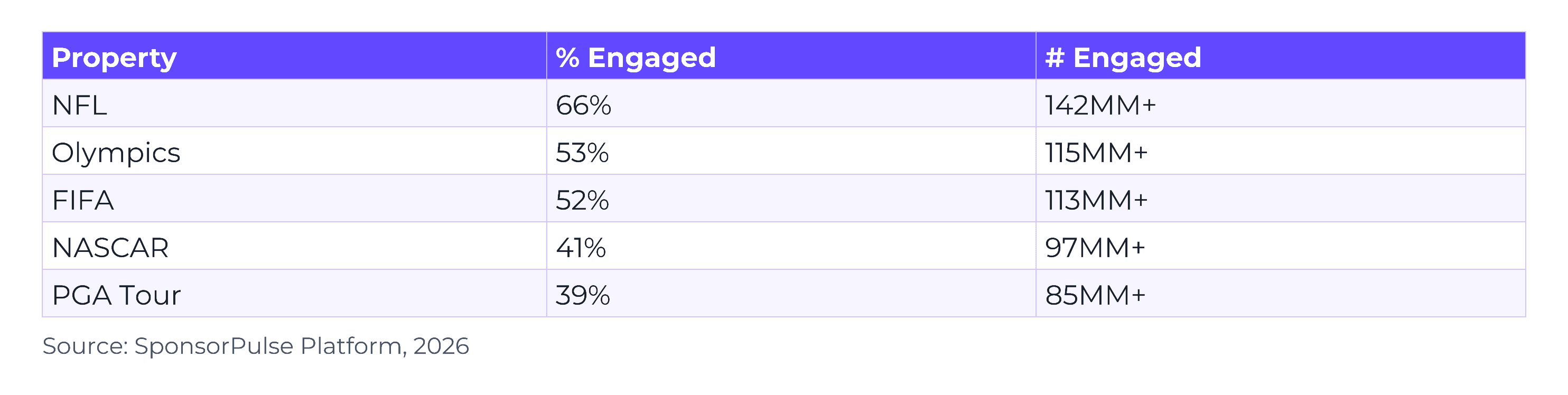
And there is no arguing that these are among the strongest reaching properties in the United States, engaging millions of Americans every year:
So why walk away?
The easy answer is that sponsorships are becoming more expensive, and brands are demanding greater accountability for their investments.
And while there's certainly truth to that, the decision to divest from a legacy sponsorship isn’t always that simple.
It's not just about the health and momentum of the property. And it's not always about the sponsorship's performance or return on investment - although strong, demonstrable returns remain one of the most compelling reasons to stay the course.
Other variables come into play.
A sponsorship can be performing well, delivering measurable brand lift and reaching the right audiences, yet still no longer represent the best investment for the business.
Conversely, a sponsorship experiencing short-term performance challenges may still warrant continued investment because of its strategic importance, long-term equity or future growth potential.
The question isn't simply whether the sponsorship is working. It's whether continuing the sponsorship is still the right decision.
10 Signals That May Suggest It's Time
1. The Cost of Staying Is Outpacing the Value Being Created
Perhaps the most obvious signal.
Sponsorship rights fees continue to escalate, particularly across premium sports properties. But the incremental value delivered doesn't always increase at the same rate.
A partnership that represented strong value five years ago may look very different at renewal.
The question isn't simply whether the sponsorship is generating positive returns. It's whether those returns justify the next level of investment.
The signal: Rights fees and activation costs are growing faster than incremental brand impact, business outcomes or the underlying value of the rights.
2. The Sponsorship Is Performing, but the Strategic Fit Has Changed
Businesses evolve. So do their objectives.
New leadership, changing consumer priorities, expansion, product innovation and shifting competitive dynamics can all influence what a brand needs from its sponsorship portfolio.
A partnership originally designed to build national awareness may have successfully achieved that objective. The brand's next priority, however, might be driving product consideration, reaching younger consumers or accelerating growth in specific markets.
The sponsorship may still be working. It just may not be working against the objectives that matter most today.
The signal: The partnership continues delivering against yesterday's objectives but has limited ability to advance tomorrow's priorities.
3. The Audience Is No Longer the Right Audience
A property's popularity and momentum are important, but size alone doesn't determine sponsorship value.
A league or event can be growing in attendance, viewership and fan engagement while becoming less relevant to a particular sponsor.
Audience quality matters. So do purchasing power, category engagement, regional concentration and the potential to influence consumer behavior.
A property can be growing while its value to an individual sponsor is declining.
The signal: The property continues growing, but the audience's relevance, business attribution potential or ability to influence the brand's target consumers is weakening.
4. The Brand Has Already Captured Much of the Available Equity
This is an interesting one.
Some sponsorships become so successful at establishing brand associations that the opportunity for additional incremental growth begins to narrow.
The brand has achieved high sponsorship awareness, strong category ownership and meaningful positive associations.
That's a good thing.
But it raises an important question: What additional value will the next five years deliver?
There is an important distinction between maintaining established equity and generating new equity. Both have value, but they shouldn't automatically command the same investment.
And walking away carries its own risk: hard-earned associations can erode or transfer to a competitor.
The signal: Incremental gains are flattening, and the cost of maintaining existing equity is becoming difficult to justify relative to alternative investments.
5. The Opportunity Cost Has Become Too Significant
Every sponsorship investment is also a decision not to invest somewhere else.
A brand may have a highly effective $20 million partnership. But what if that same investment could generate greater impact across several emerging properties, targeted partnerships, proprietary experiences or different marketing channels?
This is where sponsorship evaluation needs to extend beyond individual property performance.
The signal: Other investments offer stronger projected incremental returns, greater strategic relevance or more efficient access to priority audiences.
Importantly, those alternatives need to be evaluated with the same discipline as the existing sponsorship. A new opportunity isn't automatically a better one.
6. The Partnership No Longer Provides the Flexibility the Brand Needs
Legacy sponsorships often come with established rights structures, contractual commitments and activation requirements.
But brands increasingly want the flexibility to move quickly, experiment with new platforms, create culturally relevant content and engage consumers in more personalized ways.
A traditional sponsorship package may offer significant reach and visibility but limited ability to customize how the brand shows up.
Visa's decision to move away from its league-wide NFL sponsorship illustrates the broader appeal of more flexible, targeted approaches.
The signal: The brand's marketing ambitions have evolved beyond what the existing rights package can effectively support.
7. The Sponsorship Has Become More About Presence Than Purpose
Over time, the partnership can become something the brand simply continues out of habit, rather than a deliberate strategic decision. Annual renewals become expected. Activation plans become repetitive. And the justification for continuing gradually shifts from strategic impact to historical commitment.
"We've always been there" becomes part of the business case.
But history isn't a strategy. A strong sponsorship should have a clearly defined role within the marketing ecosystem, supported by objectives, measurable outcomes and a deliberate plan to create value.
The signal: The organization can explain why it originally entered the partnership but struggles to articulate what it needs to achieve next.
8. The Property's Direction No Longer Aligns With the Brand's Values or Priorities
Sponsorship is more than a commercial transaction. It's an association between two brands. Changes in property leadership, governance, reputation, commercial direction or stakeholder priorities can affect the value of that association.
Toyota's departure from the IOC's global sponsorship program provides an interesting example, with company leadership expressing concerns about how Olympic sponsorship resources were supporting athletes and sport.
Even when the underlying audience and commercial opportunity remain attractive, misalignment can undermine the strategic rationale for continuing.
The signal: The property's direction, decisions or values are increasingly difficult to reconcile with the sponsor's brand positioning and corporate priorities.
9. The Sponsorship's Future Potential May Be Changing
A sponsorship's track record matters, but it's equally important to consider what lies ahead.
A property may have delivered strong results for years, but changes in fan engagement, audience interests, media consumption or the competitive landscape could influence its future value.
On the flip side, a property facing some short-term challenges may still have significant growth potential. The key is understanding where the property is headed and whether it will continue to deliver value for the brand in the years to come.
The signal: Changes in audience engagement, property momentum or market dynamics suggest the sponsorship's future value may look different from what it has delivered historically.
10. The Internal Effort Is No Longer Worth the Reward
Beyond rights fees and activation budgets, partnerships require significant internal resources to manage, activate and optimize.
Strategy development, stakeholder coordination, creative execution, approvals, reporting and ongoing relationship management all demand time and attention.
For larger, more complex partnerships, that commitment can become substantial.
And while a sponsorship may be delivering positive returns, the internal effort required to generate those returns may no longer be proportionate to the value created.
This becomes particularly relevant as marketing teams face increasing pressure to do more with less, manage expanding portfolios and demonstrate greater efficiency.
A partnership that consumes a disproportionate share of internal resources can limit an organization's ability to pursue other opportunities, innovate or focus on higher-impact initiatives.
And unlike rights fees, the true cost of that internal effort isn't always captured in traditional sponsorship performance evaluations.
The signal: The time, resources and organizational effort required to manage and activate the sponsorship are becoming disproportionate to the value it delivers.
Before Walking Away, Ask One More Question: Is the problem the sponsorship itself, or how we're using it?
This distinction is critical. Declining sponsorship performance doesn't necessarily mean it's time to exit.
Sometimes, there may be opportunities to strengthen activation, refresh creative, make better use of sponsorship rights, refine audience targeting or better connect the partnership to broader marketing initiatives..
Other times, there may be opportunities to simplify how the partnership is managed, better align internal resources or make execution more efficient.
A strong property with an underperforming activation strategy may offer considerably more upside than an entirely new sponsorship.
Before divesting, brands should understand whether performance challenges can be addressed through optimization, renegotiation, rights restructuring, additional support or a different activation approach.
Walking away shouldn't be the default response to disappointing results, just as staying shouldn't be the default response to a successful history.
The Decision: Stay, Optimize, Renegotiate or Exit?
When deciding whether to renew a sponsorship, brands should consider four key questions:
1. Property Health & Momentum: How is the property doing? Is it growing, attracting fans and continuing to build excitement and engagement?
2. Sponsorship Performance & Return: Is the sponsorship delivering results for the brand? Is it helping build awareness, improve brand perceptions, influence purchase decisions and ultimately deliver value for the investment?
3. Strategic Alignment: Does the partnership continue supporting the brand's evolving business priorities, target audiences, positioning and marketing strategy?
4. Future Value, Opportunity Cost & Organizational Resources: Is the sponsorship still the best use of the brand's money, time and resources? Could those same investments deliver greater value elsewhere?
Looking at all four areas together can help brands make more informed decisions about what comes next.
And importantly, it doesn't always have to be a decision between staying and leaving.
Sometimes the best move is to renew and continue building on what's already working. Other times, there may be opportunities to adjust the investment, make better use of sponsorship rights, refresh the activation strategy or find ways to make the partnership easier to manage.
And sometimes, even after years of success, it may simply be time for something new.
The Bottom Line
The recent wave of legacy sponsorship exits shouldn't be interpreted as evidence that sponsorship is losing its effectiveness.
If anything, it reflects a more sophisticated approach to sponsorship investment.
Brands are increasingly willing to challenge longstanding relationships, question historical assumptions and reassess where their marketing dollars and organizational resources can create the greatest future value.
The best sponsorship isn't necessarily the one you've held the longest. It's the one that continues to make the greatest contribution to your business.
And knowing when to stay can be just as important as knowing when to walk away.
At SponsorPulse, we help brands understand how their sponsorship properties are performing, measure the impact, brand lift and value of their partnerships, and identify opportunities to get more from their investments. Our insights help brands make informed decisions about where to invest, what to improve, and when to renew or move on.