Community & Municipal Sponsorship Is Going Mainstream - Here's Why It Matters



Community and municipal sponsorship is moving into the mainstream as cities look for new revenue sources and brands recognize the growing commercial value of local, community-level partnerships.
Community & Municipal Sponsorship Is Going Mainstream - Here’s Why It Matters
For a long time, the idea of corporate branding on public property felt a little uncomfortable. A logo on a park bench? A company name on a community centre? It raised eyebrows. But something's shifting, and it's happening faster than most people realize.
Cities and municipalities across North America are increasingly opening the door to corporate sponsorship on high-visibility assets. We're talking arenas, parks, trails, community centres, festivals, even digital infrastructure. What used to be approached with caution is now being recognized for what it can be: a practical way to unlock new revenue, reduce taxpayer burden, and accelerate upgrades to the spaces communities love most.
The catalyst? Tightening public budgets. Municipalities are being forced to get creative, and sponsorship is emerging as a viable solution that doesn't require raising taxes or cutting programs. Instead, it brings private investment into public spaces—funding the rink upgrades, the trail expansions, the festival programming that would otherwise sit on a wish list for years.
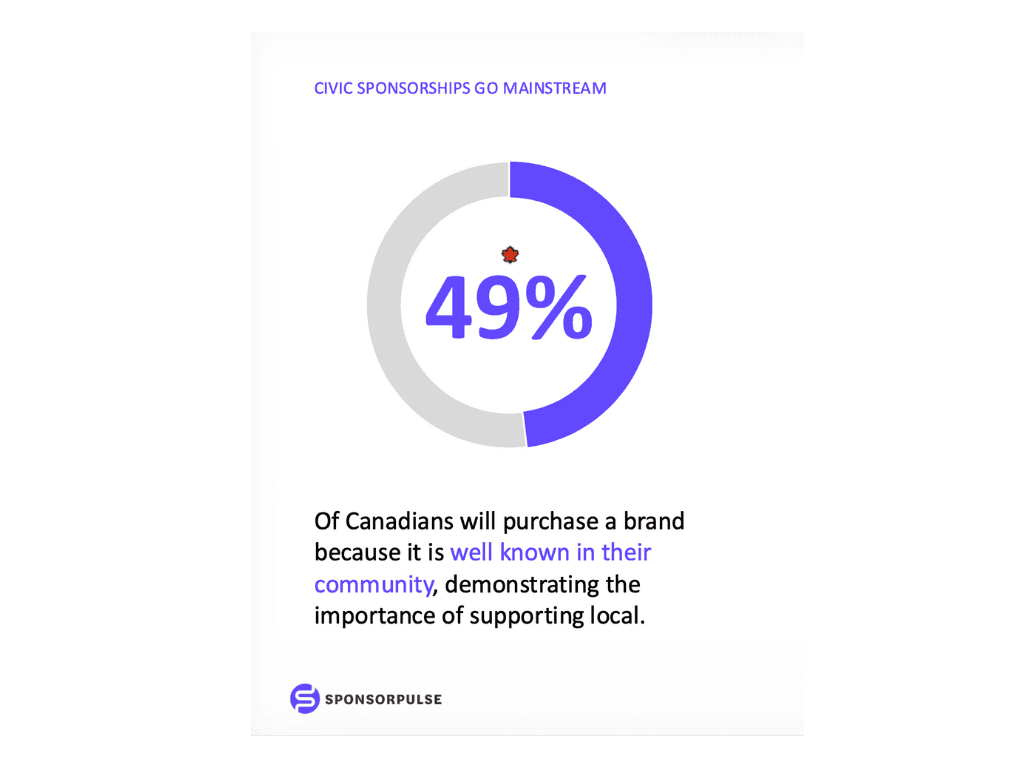
Here's what makes this particularly compelling for brands: consumers are paying attention to local involvement. Our data shows that 47% of Canadians will purchase a brand because it supports their local community, a number that's grown year over year since 2022...and 49% say they'll buy from a brand simply because it's well known in their community. Local presence isn't just a nice-to-have anymore; it's a purchase driver.
Source: Sponsorship Trends for 2026: On-Demand Webinar & Expert Insights
The engagement numbers tell a similar story. For example, in 2025 2-in-5 Canadians (40%) engaged with their local hospital foundation - an all-time high since we started tracking in 2018. Community institutions matter to people, and the brands that align with them benefit from that connection.
But here's where it gets interesting: this isn't just about awareness. Among Canadians who are engaged with community assets, a meaningful percentage would actually consider purchasing from a sponsoring brand. Local hospital foundations see 20% purchase consideration. Local art festivals hit 18%. Libraries and community centres come in at 17%. Even local transit terminals - not exactly known for emotional resonance - drive 10% purchase consideration among engaged audiences.
These aren't vanity metrics. This is real commercial intent tied to community-level sponsorship.
And municipalities are getting sophisticated about how they approach these partnerships. They're moving away from low-visibility, transactional arrangements and toward strategic sponsorship programs that integrate brands into core community assets in meaningful ways. A brand shouldn’t just get naming rights on an arena - they should become woven into the programming, the youth leagues, the community events that happen inside it. They're not just visible; they're present.
The future of community sponsorship lies in deeper integration and more purposeful alignment. Cities aren't just selling logo real estate anymore - they're crafting multi-layered partnership ecosystems that connect brands to festivals, youth programs, public art, transportation initiatives, and wellness programming. More municipalities are formalizing sponsorship policies, leveraging data to price assets accurately, and building out inventory in ways that make it easier for brands to engage.
The result? Win-win models where businesses gain meaningful visibility and genuine social impact opportunities, while communities receive enhanced facilities, richer programming, and sustainable funding for the public spaces that make their cities vibrant.
For sponsorship teams, the takeaway is clear: community and municipal partnerships aren't a niche play anymore. They're moving into the mainstream as the consumer data supports the investment and the opportunities are expanding. The question is whether you're positioned to take advantage of them.
If you're exploring how community-level sponsorships could fit into your strategy, or if you're a municipality looking to build out a more robust partnership program, we'd love to chat.