Marketing Works Best When Every Touchpoint Tells the Same Story.


Marketing is most effective when every touchpoint - from sponsorship to advertising - works together to reinforce one clear, consistent brand story.
One of the most common organizational challenges in marketing isn't creativity.
It's integration.
In many organizations, different marketing disciplines are managed by different teams with different objectives, different budgets and different measures of success. Brand advertising sits with Marketing. Sponsorship lives within Partnerships. Corporate citizenship is owned by ESG or Community Investment. Social media, PR and digital each have their own leaders.
Every team is doing good work.
The challenge is that consumers don't experience these efforts individually, they experience one brand.
The most effective organizations recognize this simple truth: every customer touchpoint should reinforce the same idea.
Every Marketing Tool Has a Different Job
No single marketing channel is designed to do everything.
Mass media excels at creating awareness and broad reach.
Digital delivers precision and personalization.
Social creates conversation.
Experiential creates immersion.
Public relations builds credibility.
Corporate citizenship demonstrates values.
Sponsorship creates emotional connection by placing brands inside the passions people already care about.
None of these tactics are inherently better than another, they simply solve different marketing problems.
The objective isn't choosing one.
It's choosing the right combination.
Purpose Is What Connects Everything
The brands creating the greatest impact aren't necessarily spending the most, they're aligning the most.
Rather than building disconnected campaigns for every channel, they begin with one clear purpose or positioning.
Every marketing discipline then asks the same question:
How can we bring this idea to life through our channel?
Advertising tells the story.
Sponsorship allows people to experience it.
Community investment demonstrates it.
Employees live it.
Public relations validates it.
Each discipline plays a different role, but every one reinforces the same narrative.
That's when marketing begins to compound.
Integration Produces Better Results Than Individual Excellence
SponsorPulse and IMI have consistently found that integrated marketing efforts outperform standalone initiatives.
In one Canadian study, we compared the performance of a traditional brand campaign, sponsorship on its own, and the two working together.
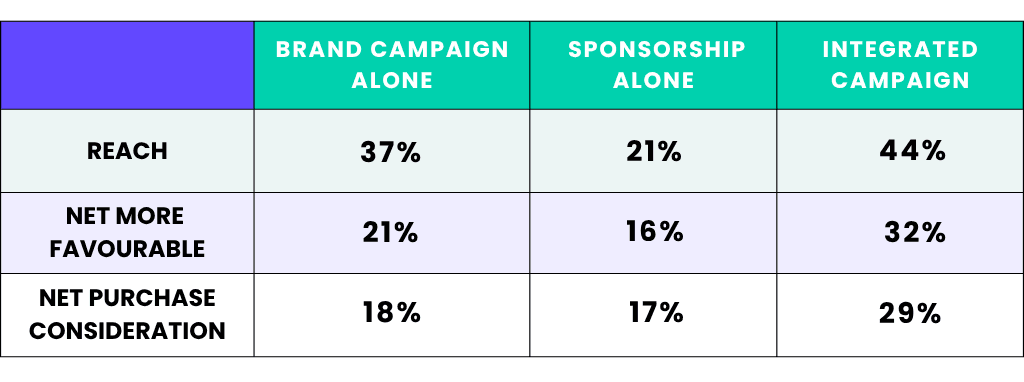
The takeaway isn't that sponsorship is more effective than advertising - or vice versa.
It's that consumers respond most positively when multiple touchpoints reinforce the same brand story.
Marketing channels don't simply add together.
When integrated effectively, they multiply one another.
Integration Requires Organizational Alignment
This sounds straightforward but in practice, it's often difficult.
Many organizations separate Brand Marketing, Corporate Sponsorship and Corporate Citizenship into different departments.
Each has its own planning process.
Its own budget.
Its own KPIs.
Its own timeline.
Often, everyone is working toward similar business objectives without a shared framework for how their work connects.
The strongest organizations overcome this by organizing around one masterbrand platform rather than individual channels.
Instead of asking, "What should our sponsorship strategy be?" or "What should our advertising campaign say?"
They ask:
"How should every part of our organization express who we are?"
That subtle shift changes everything.
What Integration Looks Like
Some of today's strongest brands provide useful examples.
Canadian Tire has built its purpose around helping Canadians play, participate and live active lives. Its "We All Play For Canada" Olympic platform connects elite sport with grassroots participation, while programs like Jumpstart reinforce the same belief year-round. Sponsorship, community investment and brand marketing all tell the same story.
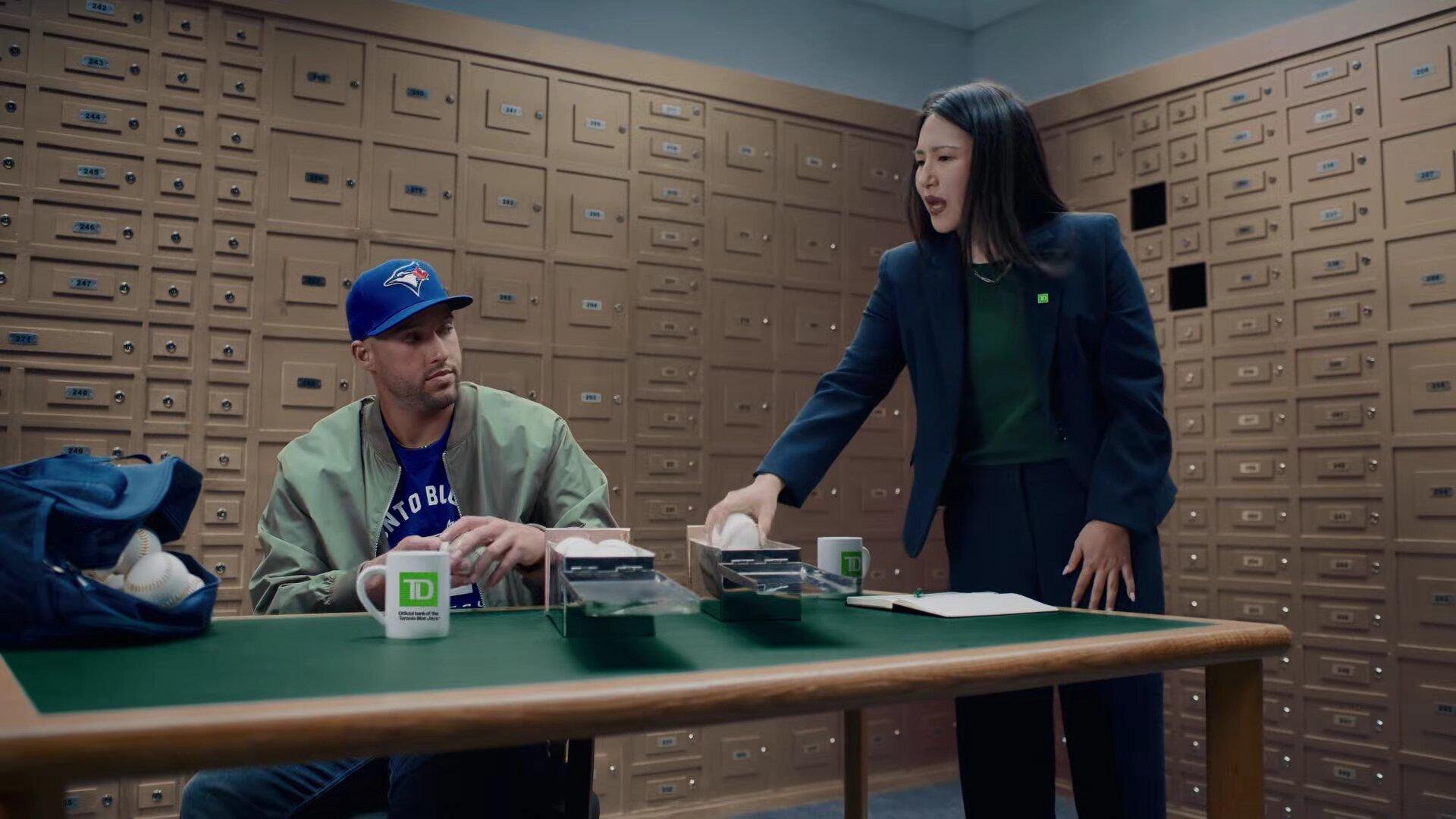
TD Bank recently launched its unified North American "More Human" brand platform. Rather than creating a separate sponsorship message, TD has integrated this campaign into its long-standing partnership with the Toronto Blue Jays, most notably through advertising featuring outfielder George Springer. Baseball becomes another channel through which the bank expresses the same brand promise.
Coca-Cola uses FIFA World Cup 2026 as another expression of its longstanding purpose of bringing people together through shared moments of happiness, optimism and human connection. Its FIFA 2026 campaigns - "Feel It All" and "Uncanned Emotions" - build on that purpose by shifting the spotlight away from the matches themselves and toward the emotions and rituals of fans.
BMW's partnership with Coachella Valley Music and Arts Festival is less about selling vehicles and more about reinforcing its modern brand positioning around innovation, progressive luxury, creativity and emotionally engaging experiences. The festival reinforces the same positioning found across its products and communications and is a backdrop for showcasing new models and demonstrating the brand's vision for the future.
Sephora's partnership with F1 Academy is one of the clearest examples of a sponsorship directly expressing a brand's purpose: to champion a world of inspiration and inclusion where everyone can celebrate their beauty. Rather than simply placing its logo on a race car, Sephora is using motorsport to demonstrate that confidence, self-expression and ambition belong everywhere—including spaces that have traditionally excluded women.

In every case, the partnership isn't creating a new message, it's strengthening an existing one.
The Consumer Doesn't See Departments
Perhaps the biggest reason integration matters is because consumers don't organize brands the way companies organize themselves.
They don't distinguish between an advertisement, a sponsorship activation, a community initiative or an employee volunteer program.
They simply notice whether everything feels connected.
When every interaction reinforces the same purpose, brands become easier to understand, easier to remember and easier to choose.
When every touchpoint tells a different story, even strong individual campaigns struggle to build lasting meaning.
The Future of Marketing Is Connected Marketing
The conversation shouldn't be about whether advertising, sponsorship, PR, experiential or corporate citizenship deserves a larger share of the budget.
Each has an important role to play.
The real question is whether they're working together.
The strongest brands don't think in channels, they think in ideas.
They define a clear purpose, then use every available marketing tool to bring that purpose to life in ways that are authentic, consistent and emotionally meaningful.
Because in today's marketplace, competitive advantage doesn't come from having the best individual campaign, it comes from building the most connected brand.